
Arborist Consultation Services in Brighton MI
ISA Certified Arborists
Serving Milford, Commerce, West Bloomfield, White Lake, Clarkston, Novi, Lake Orion and more
ProfessionalArborist Consultation
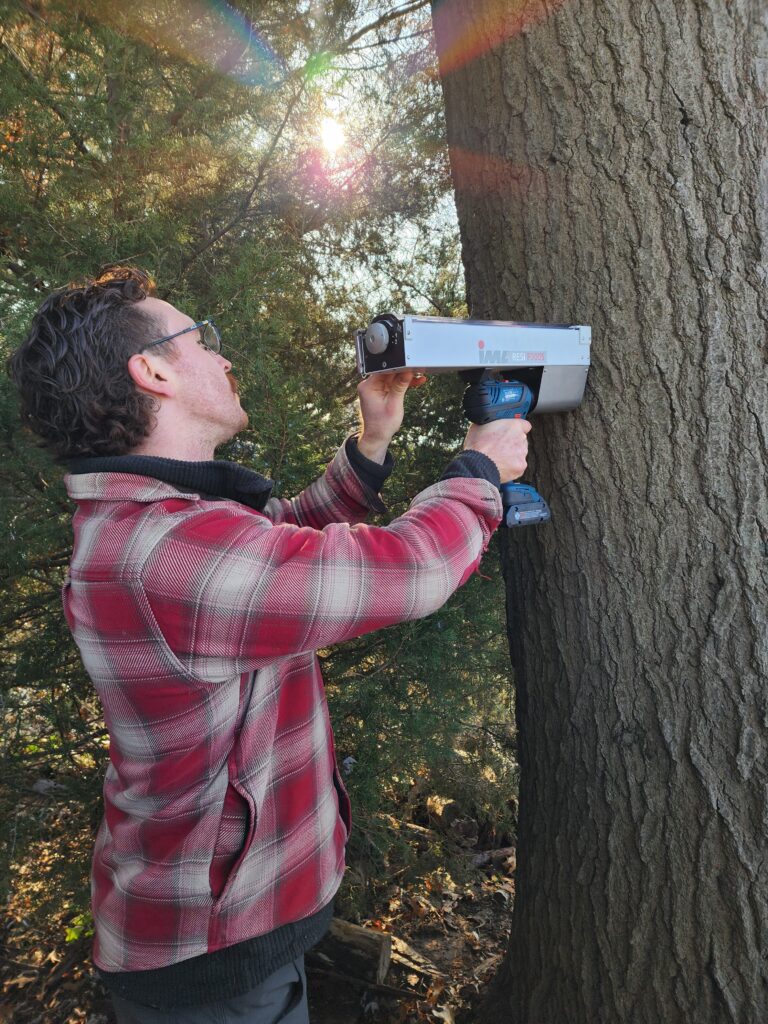
What an Untreated Tree Problem Can Actually Cost
Unusual bark scaling, a cluster of wilted leaves on one side of the canopy, a branch that just stopped leafing out – these are the signs most people put off dealing with. That delay is where an Arborist Consultation Service pays for itself, because what looks minor at the surface can mean structural failure is already underway. The large native oaks and maples common to established neighborhood areas didn’t grow overnight, and they don’t fail overnight either. But they do fail.
If you’ve noticed discoloration or dieback and figured it could wait, consider what waiting actually costs. An early hazardous tree assessment might lead to targeted treatment or a single removal. The same tree ignored for another year could mean emergency tree service at two or three times the price, storm damage to your roof or fence, and a liability question if it lands on a neighbor’s property.
Tree health problems don’t pause. A diseased oak losing its canopy this year is a hazard tree next year and a crane job the year after.
ISA Certified Arborist Consultation
Oak Wilt and Urban Stress Are Active Threats to Brighton Properties
The Brighton Recreation Area sits at the edge of town, and Michigan DNR communications have identified it as a site where oak wilt is an active, documented concern. If you have oaks on a property near that corridor, your trees are not in a vacuum. Oak wilt spreads through root grafts and beetle activity, and proximity to an infected area is a real risk factor, not a hypothetical one.
Generic tree care companies are not equipped to evaluate that kind of exposure. Diagnosing oak wilt requires understanding tree biology beyond a quick visual check. The ISA Michigan Oak Wilt Qualified credential exists specifically for this, and it informs how a proper arborist consultation gets approached when oaks are involved.
If you have noticed leaf scorch, vein discoloration, or rapid defoliation on an oak this year, that is not something to monitor casually. Tree health monitoring on oak-heavy parcels near the Recreation Area should include targeted assessment for this disease, not just general pest management review.
A proper diagnosis gives you a clear answer: whether the tree is infected, at risk, or healthy. That is a concrete outcome that changes what you do next.
How Ascension’s Credentials Translate Into a More Useful Consultation for You
ISA Certified status, awarded through the International Society of Arboriculture, confirms that a certified arborist has passed a rigorous exam covering tree biology, diagnosis, and care. That matters. But it does not automatically mean the person walking your property is producing a structured, defensible risk evaluation.
TRAQ, the Tree Risk Assessment Qualification, is a separate credential with a different purpose. It trains arborists to apply a formal methodology when assessing hazardous trees, producing documented findings rather than informal opinions. Most arborists in the Brighton area hold ISA Certification. Fewer hold TRAQ. That gap is exactly what makes a site visit less useful when the stakes are higher than routine tree care.
If you need insurance claim support after storm damage, or if you are facing a legal question that requires expert witness documentation, an informal site visit from a certified arborist does not give you what you need. A TRAQ-qualified assessment does. The same applies to tree protection on construction sites, where a documented evaluation carries weight with contractors and local authorities.
Ascension is a family-owned, locally rooted operation. When a report carries a signature here, it carries a name and a local reputation. For a property along the Hyne Road corridor with mature oaks, that accountability is not a small thing.
From Initial Walkthrough to Written Assessment - What You Can Expect
Scheduling a consultation starts with a brief conversation about what you’ve noticed – a leaning trunk, discolored leaves, a tree near a foundation. That context helps the arborist arrive prepared.
On-site, the walkthrough covers structure, canopy condition, root zone health, and visible stress indicators. For properties where mature street trees face urban stress and city tree ordinances, that documentation becomes especially useful if questions arise later.
Soil is part of the picture, too. If compaction or nutrient deficiency is contributing to decline, you’ll hear specific recommendations – whether that’s soil improvement, deep root fertilization, or adjusted drainage. Nothing vague.
If you have multiple trees, the arborist can complete a basic tree inventory, cataloging species, condition, and priority care needs across your property. That’s where urban forestry consulting terminology starts making practical sense for a residential parcel.
Disease diagnosis and pest management concerns get addressed directly. If something warrants a TRAQ-based tree risk assessment, that process follows standardized criteria and produces a written report you can actually use – for insurance, for a contractor, or simply for your own decision-making.
You leave the consultation knowing what each tree needs, what can wait, and what shouldn’t.
Schedule Your Brighton Arborist Consultation Before the Window Closes
Most people assume a tree problem stays roughly the same size while they figure out what to do. It doesn’t. Decay spreads, root systems weaken, and disease moves into adjacent tissue, whether or not you’re ready to act.
If you have a large oak showing any sign of decline, the biology doesn’t pause. What’s treatable at one stage becomes structural later. A consultation now creates a documented baseline, so every future decision, whether that’s tree pruning, cabling and bracing, or eventually tree removal, is made with real information rather than guesswork.
If you’ve just bought a home and you’re not sure what you’re looking at in the backyard, that’s exactly when a professional assessment pays for itself. Knowing which trees are healthy, which need tree trimming, and which may need stump grinding down the road shapes your entire long-term care plan.
A local family-owned team based nearby responds differently from a national franchise. There’s no dispatch chain, no unfamiliar crew. You get tree care experts who know Brighton properties and can return when follow-up is needed.
The next step is straightforward. Reach out for a free estimate, walk the property together, and leave with a clear picture of where your trees stand.