Milford’s white winters are quite the mesmerizing sight, but they can also be a challenging time for the beautiful trees framing your yard.
From the biting cold to the blowing winter winds, this season can threaten your trees in more ways than one, which is why comprehensive tree care is even more crucial during the cold months.
If you’re worried about your tree’s welfare, here are tips to help your trees power through winter and come out stronger in spring.
1. Water Your Trees Deeply
Some might get the impression that snow and ice indicate an oversupply of moisture for trees. On the contrary, the winter’s cold winds can actually dehydrate your tree.
Winter watering is crucial to keeping your trees healthy throughout the season.
Water deeply using soaker hoses that trickle the water slowly so as not to drown the tree roots.
Start in the fall to ensure enough moisture is in the soil before the ground freezes.
In winter, wait for the ground to thaw before watering, and do it during midday to give the soil time to absorb the water and avoid freezing overnight.
2. Mulch the Soil
Now that there’s enough water deep in the soil, the next thing to do is keep it moist amidst the cold weather.
Mulch gets the job done. It insulates the soil and retains moisture beneath.
Apply 2-4 inches of mulch around the tree’s base without touching the trunk to avoid root rot, and spread it as far as the tree’s drip line or the outermost edge of the branches.
As an added benefit, organic mulch made of wood chips, straw, and leaves eventually breaks down, releasing nutrients for the root system to feed on and boost new growth in early spring.
3. Repel the Road Salt
It’s common to use road salt in deicing pavements and walkways, but if there are trees nearby, you might want to think twice.
Sodium chloride absorbs water, which means it can also contaminate the soil and take away your tree’s much-needed moisture, impacting its overall health.
If your tree is next to a salted road, protect it with mulch or physical barriers, such as snow screens or fences, to repel salt spray.
For your yard’s slippery walkways, you can use alternatives such as sand or fine gravel that are safer to the surrounding plant life.
4. Remove the Heavy Snow
Over time, the snow will accumulate on your tree’s branches. This may appear majestic at first glance, but it can already be causing damage upon closer look.
When the snow and ice get too heavy, the weight can weaken or break your tree’s branches.
A burlap wrap can shield young and small trees from snowfall. Wrapping the tree trunk can also prevent sunscald and frost cracks.
For mature trees, use a long broom and gently move branches upward to remove the thick blanket of snow. Do not do this during extreme freezes, though, as branches may be brittle and prone to breaking.
5. Prune Trees
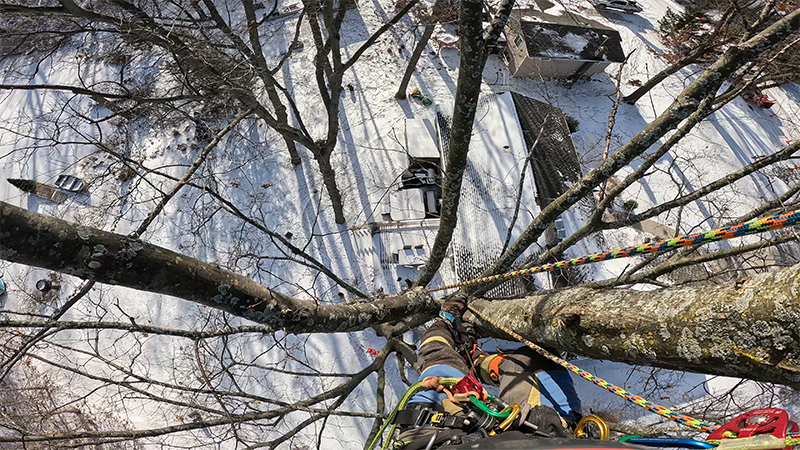
For most trees in Michigan, winter is actually the ideal time for professional pruning.
A staple in tree health care, pruning is the selective removal of:
- Crossing or rubbing branches
- Co-dominant limbs
- Diseased or dead branches
- Branches growing inward or downward
- Damaged branches
- Water sprouts or suckers
- Branches that grow too close to your home or power lines
With deciduous trees having a bare crown come winter, it’s easier for professional pruners to assess your tree’s structure and cut off the unwanted branches.
Another benefit of pruning during the winter months is that it falls during the dormant season for both trees and insects.
This period reduces stress on the healing tree, and the inactivity of pests also lowers the risk of your tree contracting diseases through its open wounds.
6. Apply Anti-desiccant Spray
If evergreen trees also adorn your property, anti-desiccant sprays come in handy when winter arrives.
Anti-desiccants create a protective coating on your tree’s leaves or needles to lock the moisture inside that would otherwise be dried out due to the sun and dry winds.
The best time to apply them is on a dry day when the winter weather is above freezing and no rain has been forecast for the next 24 hours.
7. Plant Health Care for Year-Round Protection
When it comes to tree care, being reactive can leave you scrambling for help when the harsh winter storms strike down your vulnerable trees.
Plant Health Care (PHC) is about taking proactive steps to keep your trees healthy and structurally sound.
Provided by an arborist, a PHC program includes tree inspections and tree care services that support the tree’s healthy growth while addressing its weak points.
By focusing on your tree’s long-term health, you give it the best chance to fight off diseases, storm damage, and whatever challenges Michigan winters may throw its way.
Hire Your Local Arborists in Milford, Michigan
With the right support, your trees can weather the winter season without a hitch.
Need professional winter care for your prized trees? At Ascension Tree Care, our ISA-certified arborists are committed to providing top-quality tree care solutions across Milford, Michigan, and its surrounding areas.